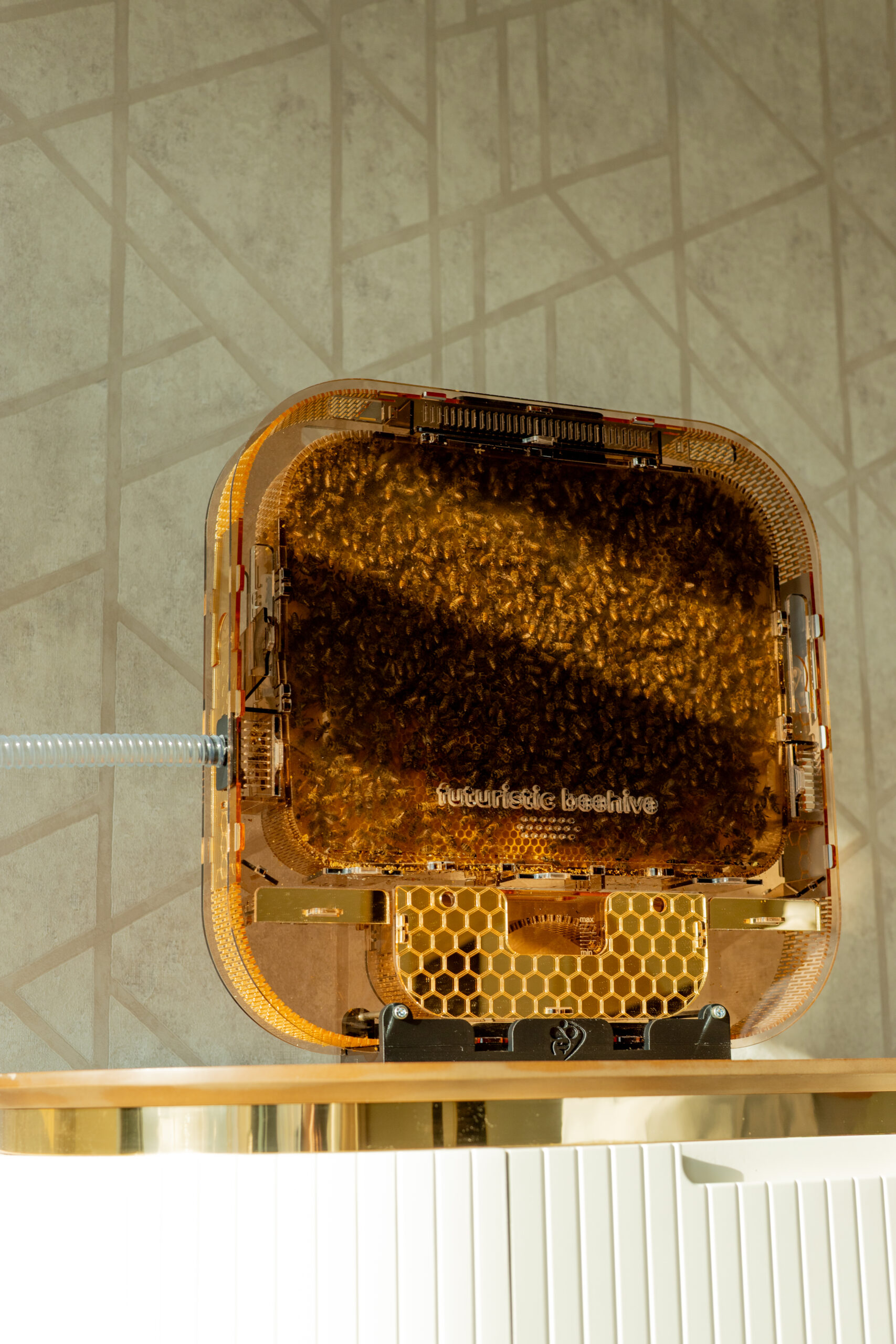
The beehive that
lives indoors.
Mounts on an interior wall. The colony forages up to 5 km around your home. No suit, no field, no beekeeping tools.
- Free DHL worldwide
- 30-day returns
- Assembled in Europe
Three steps. One afternoon.
From a box on your doorstep to a colony on your wall, with a local beekeeper guiding the part that matters most.
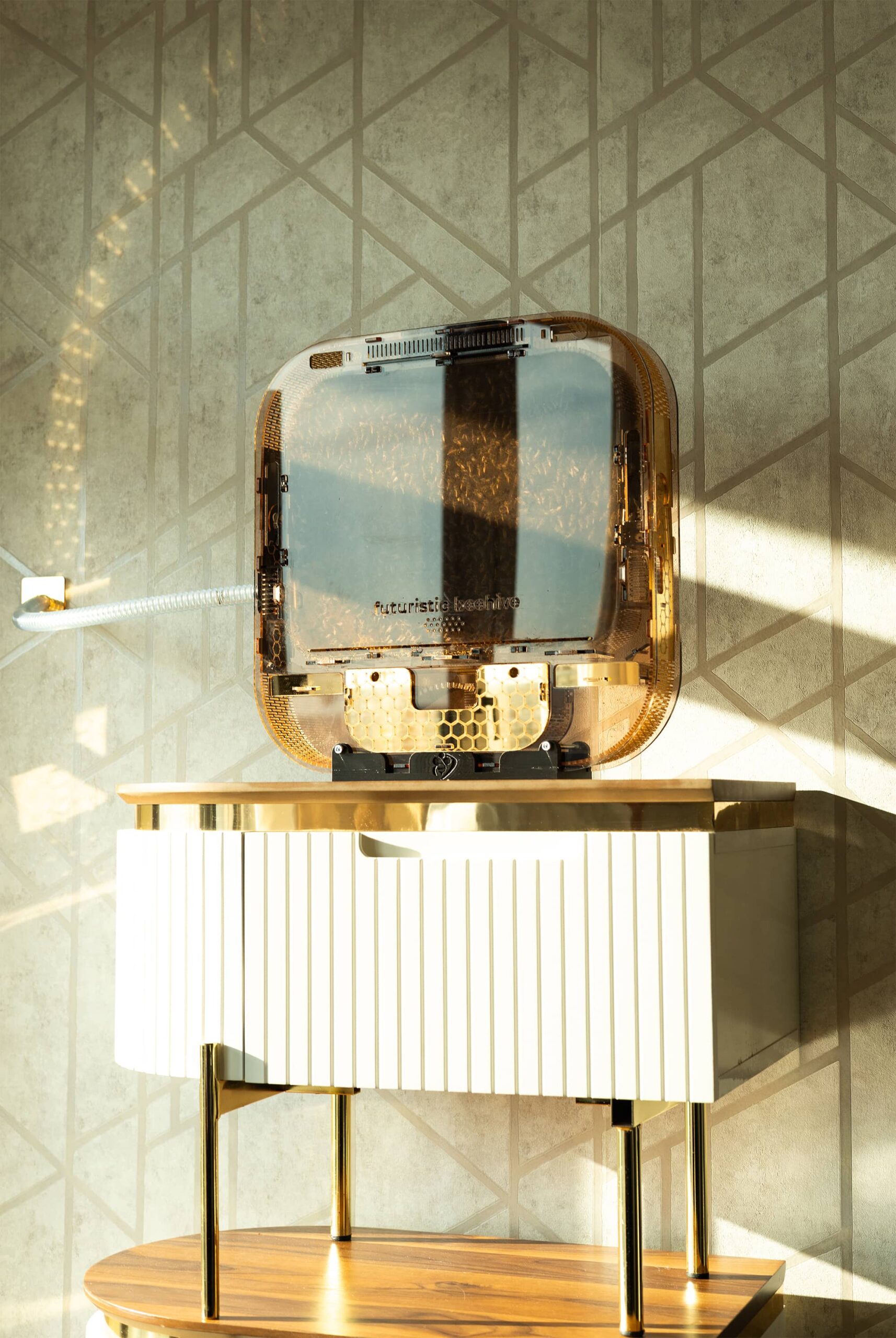
Mount it
Drill a Ø20 mm opening through the exterior wall, pass the tube, seal it with silicone. About twenty minutes, a little more than hanging a picture.
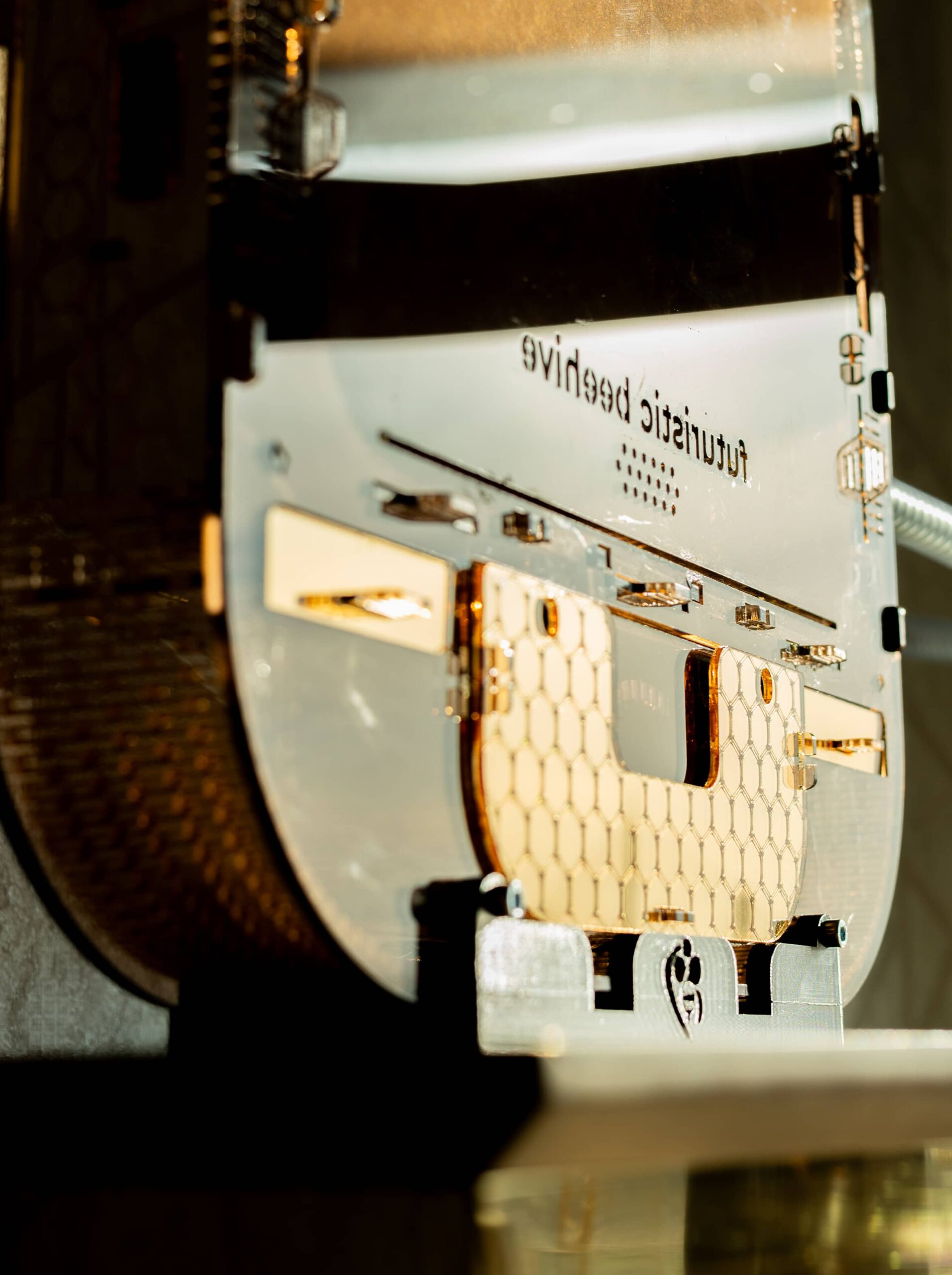
20 min · 20 mm drill bit
Bring the colony
A local beekeeper introduces at least a kilogram of bees with a selected queen. Tell us where you live and we help you find one.
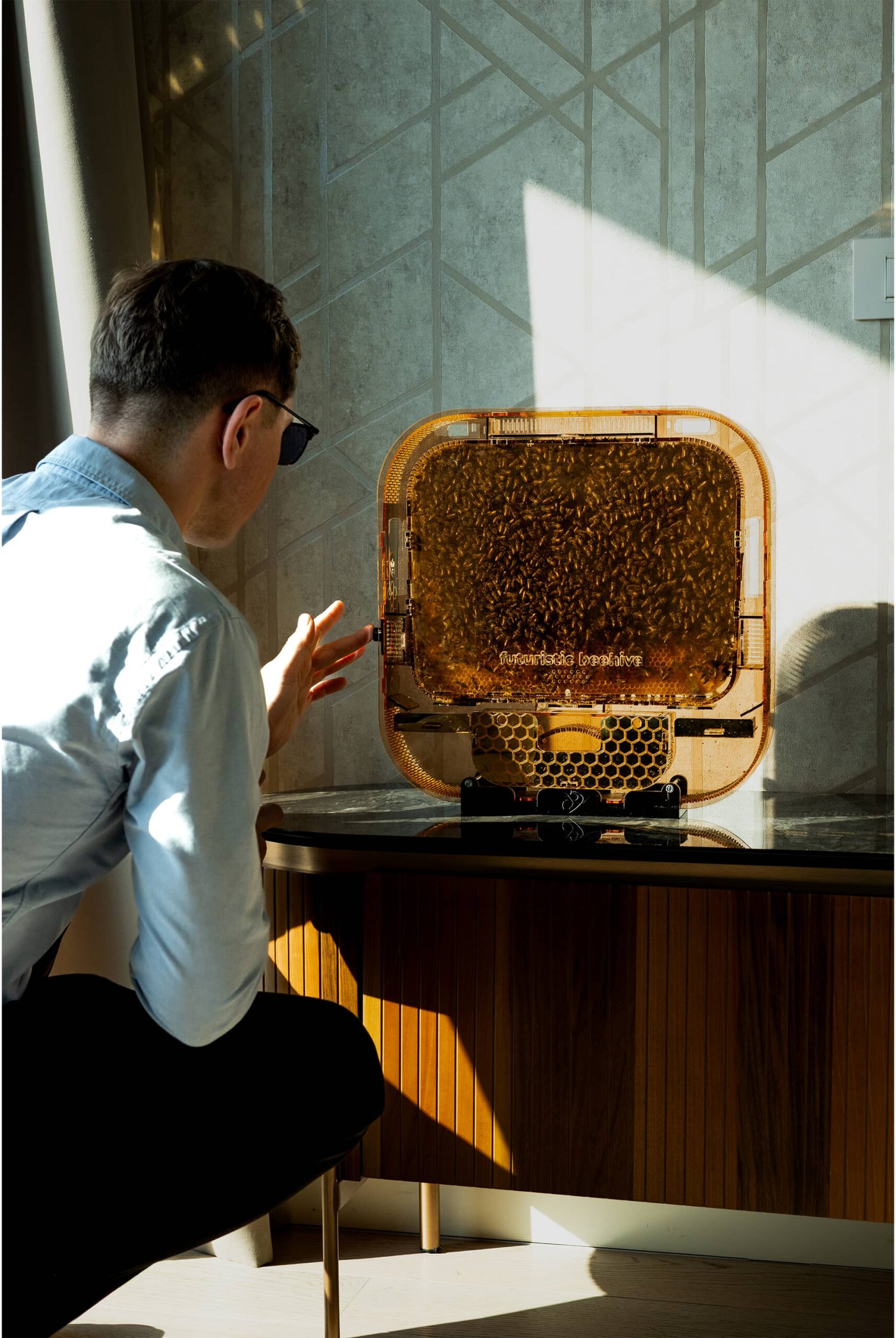
Bees sold separately
Live with it
They forage up to five kilometres and come home through the tube. Refill the feeder when it runs low. Watch them any hour of the day, through glass.
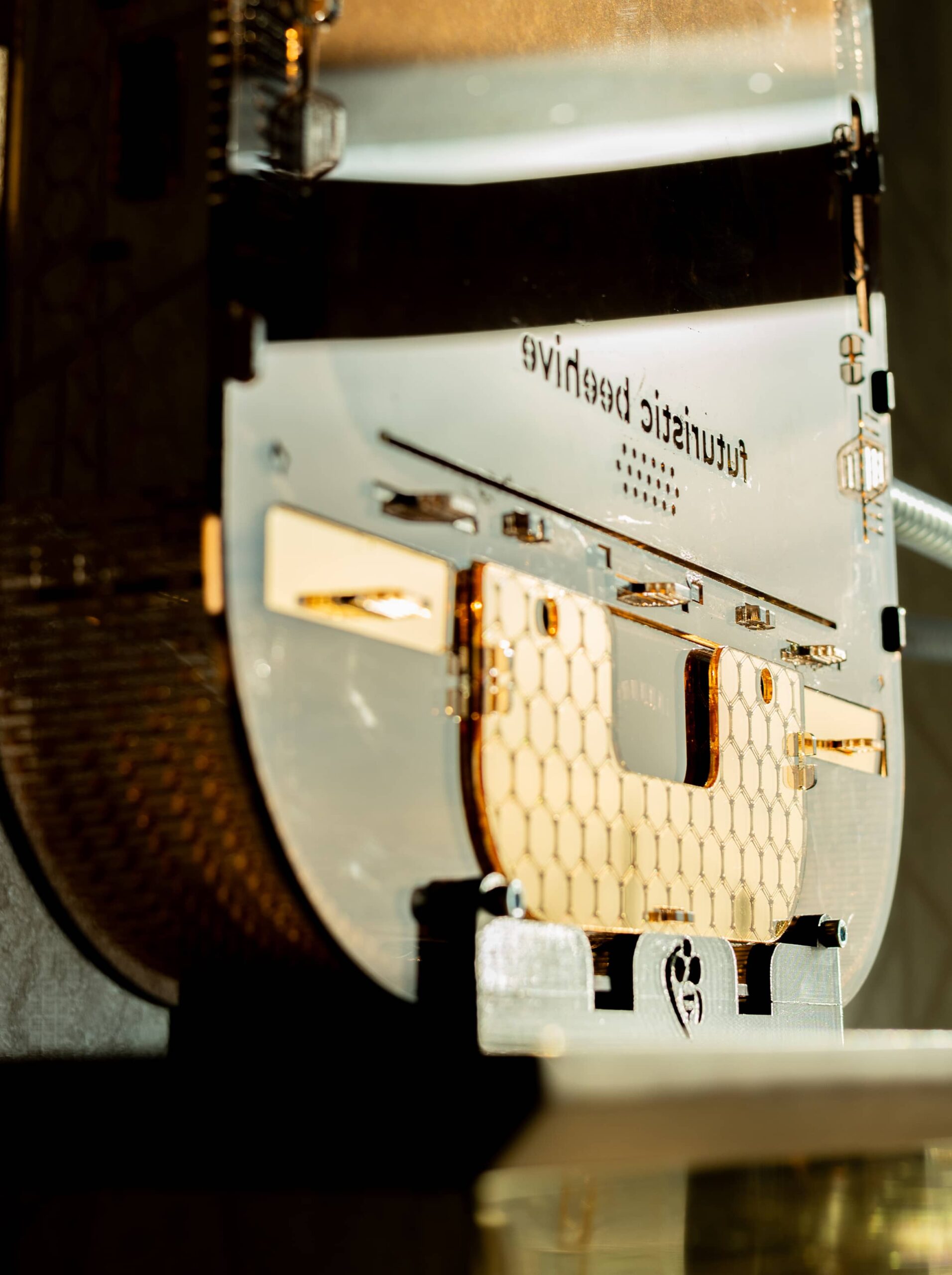
5 km range · Built-in feeder · Pollen and honey collectorThe full manual and the complete warranty terms.
Need a document in another language? Write to us and we will send it.
The beehive that lives indoors.
Mounts on an interior wall. The colony forages up to five kilometres through a Ø20 mm tube. No suit, no field, no beekeeping tools.
- Insured and tracked, door to door
- Thirty days to change your mind
- 12-month warranty, assembled in Europe
- Stripe · 256-bit encryption
Bees are not included. A local beekeeper introduces the colony, and we help you find one. Import duties, where applicable, are paid on delivery.
Symbiotic 3024
Every measurement, openly. Nothing here changes after you order.
- Dimensions
- 43 × 43 × 8 cm
- Wall opening
- Ø 20 mm
- Colour
- Gold, dim bronze
- Observation
- 0–24 hours, through glass
- Collector
- Pollen and honey
- Feeder
- Integrated
- Time
- About 20 minutes
- Tool required
- 20 mm drill bit, or a core drill for concrete
- Sealing
- Silicone around the tube, recommended
- Mounting
- Interior wall, hardware included
- Bees
- Not included Introduced by a local beekeeper
- Minimum
- 1000 g of bees, or 5 frames
- Queen
- Selected, not random
- Foraging range
- Up to 5 km
- Beekeeper
- Presence recommended at introduction
- Equipment
- No suit, no smoker, no extractor, no hive tool
- Maintenance
- Refill the feeder, look in occasionally
- Seasonal work
- Small adjustments if your climate calls for them
- Shipping
- Free DHL Express worldwide, insured and tracked
- Assembly
- Europe
- Duties
- Where applicable, paid on delivery
- Returns
- 30 days
- Warranty
- 12 months. EU customers keep their statutory two-year rights.
The full manual and warranty terms are public. Read them before you order.
The things people ask us most.
You'll never share a room with them. Symbiotic is sealed on your side, and the colony comes and goes only through a Ø20 mm tube that leads outside. Think of it like an aquarium. You watch them behind glass, they live on the other side.
The interior face of the hive is closed, and the seal around the tube is made during installation. There is no route from the colony into your room, and no reason for the bees to look for one.
As with anything mounted on a wall, place it where small children cannot climb to it.
Rules vary by country and often by city. Many places ask you to register a hive, and some set a minimum distance from neighbouring property.
Send us your city and we will help you find the local requirement, but the final check is worth doing yourself before you order.
About twenty minutes, a little more than hanging a picture. You will need a 20 mm drill bit, or a core drill if the wall is concrete. Mounting hardware and the entrance tube are in the box.
We recommend sealing the opening around the tube with silicone afterwards.
Yes, as long as you have an exterior wall the tube can pass through. The hive mounts on the interior side, and the opening is 20 mm.
If you rent, check with your landlord first. The opening is small, but it is a permanent change to the wall.
A standard 20 mm bit works for timber and plaster. For concrete you will need a core drill of the same diameter, which most hardware shops rent by the day.
Live bees cannot cross most borders without permits and quarantine. There is also a better reason: local bees are already adapted to your climate, which gives the colony a much stronger start.
From a local beekeeper. Write to us with your location and we will help you find someone nearby.
You need at least 1000 g of bees, or five frames if bought as part of a framed hive, with a selected queen. Prices vary by region, so ask your beekeeper what is usual where you live.
It happens, even to seasoned beekeepers. When it does, you source a new colony the same way you did the first time.
The hive itself is built to last, so most owners think of the colony as something that may need renewing rather than a one-time purchase.
Very little. Refill the feeder when it runs low, look in on the colony from time to time, and make small seasonal adjustments if your climate calls for them.
No protective suit, no smoker, no extractor, nothing heavy to lift.
Yields depend on your climate, the season and the strength of the colony, so we do not publish a single number. Anyone who quotes you a figure without knowing where you live is guessing.
A local beekeeper can tell you what is realistic in your area, and that is the honest answer.
Very little. The colony clusters together and lives off its stored honey, keeping the centre warm by shivering its flight muscles. If reserves run low, top up the built-in feeder.
Ask your local beekeeper what winter preparation is usual in your climate.
Free DHL Express worldwide, insured and tracked door to door. You receive a tracking number once the parcel leaves us.
Import duties, where applicable, are paid on delivery. These depend on your country and are outside our control.
Every shipment is insured door to door. Send us photos within 48 hours of delivery and we will arrange a replacement.
You have 30 days to return it. The hive carries a 12-month manufacturer warranty against defects.
If you are in the EU, your statutory two-year conformity rights apply on top of that. The full warranty terms are public in the Documents section above.
Somewhere between an aquarium and an appliance.
A living colony on your wall, going about its work while you go about yours. Ten thousand animals with a job, a schedule and a route.
Something to watch
Ten thousand animals working behind glass, at any hour, with no suit and no drive to a field. Most owners tell us the same thing. They came for the honey and stayed for the watching.
Sealed on your side
The interior face is closed. There is one opening and it points outward through your wall. Bees are looking for flowers, and the flowers are outside. They have no route into your room and no reason to want one.
Engineered, then checked by beekeepers
Designed and assembled in Europe by engineers, with professional beekeepers involved in the research and development. When you write to us you reach the people who built it, not a support queue.
What it's like to live with one.
All reviews from verified purchases
My daughter can now tell a forager from a guard bee. She's seven. The Futuristic Beehive taught her more in a month than any book I bought.
My wife was against it for two weeks. Then she spent an evening with her face six inches from the glass. Nobody in this house has been stung.
The pollen changes colour every few weeks. Orange in spring, then a pale grey I still haven't identified. It's a calendar you can read.
It's the first thing every guest asks about, and the last thing they look at before leaving. The Futuristic Beehive doesn't look like equipment. It looks like it belongs there.
We have a toddler and a cat. Neither has any way to reach the colony, and the colony has no reason to reach them. That was the whole question for me.
I've watched the same colony for four months and I still don't have it figured out. Every time I sit down there's something new happening behind the glass.
You start noticing things you never had a reason to notice. When the lime trees flower. Which days are too windy. The bees knew first.
The collector fills faster than I expected. I had assumed pollen would be the difficult part. It turned out to be the easy one.
I've mounted plenty of things on walls. Nothing that has ever made a room feel like this.